TheSchoolRun.com closure date
As we informed you a few months ago, TheSchoolRun has had to make the difficult decision to close due to financial pressures and the company has now ceased trading. We had hoped to keep our content available through a partnership with another educational provider, but this provider has since withdrawn from the agreement.
As a result, we now have to permanently close TheSchoolRun.com. However, to give subscribers time to download any content they’d like to keep, we will keep the website open until 31st July 2025. After this date, the site will be taken down and there will be no further access to any resources. We strongly encourage you to download and save any resources you think you may want to use in the future.
In particular, we suggest downloading:
- Learning packs
- All the worksheets from the 11+ programme, if you are following this with your child
- Complete Learning Journey programmes (the packs below include all 40 worksheets for each programme)
You should already have received 16 primary school eBooks (worth £108.84) to download and keep. If you haven’t received these, please contact us at [email protected] before 31st July 2025, and we will send them to you.
We are very sorry that there is no way to continue offering access to resources and sincerely apologise for the inconvenience caused.
12 ways to give memory skills a boost and prepare for SATs

1. Mnemonics
Memory aids such as acronyms and acrostics can be a really useful tool in remembering information, particularly in the case of lists or groups of facts: remember learning ‘Every nice boy deserves favour’ when learning to read music? Research shows that mnemonics are most helpful if they have a personal meaning, so encourage your child to get into the habit of thinking up their own keywords to help them retain groups of information.


Prepare your child for SATs today
- Your guide to SATs
- KS1 & KS2 SATs revision courses
- SATs practice papers in English & maths
2. Rote learning
Learning parrot-fashion may be considered old-school, but it’s a great way to embed information in the memory, particularly for times tables and other maths basics. Experts believe that rote learning is the key to a child being able to achieve automaticity, and reciting them out loud is particularly crucial.
3. Memory games
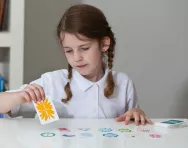
Light-hearted memory games such as Kim’s Game (where you lay out a selection of items, let your child study them for a minute, then remove one and ask them to identify what’s missing) and Shopping List (a group game where each person in turn says, ‘I went to the shops and I bought…’ and names an item of their choice, but also has to repeat their friends’ choices in order) will help to give your child’s brain a workout and build memory skills.
4. Attention grabbers
‘Curiosity increases attention and memory,’ says Dr Judy Willis, author of How your child learns best (£14.19, Sourcebooks), so make learning fun and attention-grabbing, for example by making posters about your child’s current topic, or acting out a story scene that they needs to commit to memory. ‘Memorable events make memories,’ Judy adds.
5. The loci method
A tried-and-tested memory technique to teach your child, the loci method involves him creating a journey in their mind, and visualising the things they need to remember at key points along the route. For example, they might picture their walk to school, and visualise one object at the end of the front path, one at the bus stop, another at the pedestrian crossing… When they need to recall the info, they mentally retrace their footsteps and should remember each item as they get to its location.
6. Puzzles
Number and maths puzzles such as code breakers, crosswords and hangman can help to improve your child’s working memory. This ability to hold information in our mind and manipulate it over a short period of time is crucial in many classroom and exam situations, including mental maths and spelling tests.
7. Chunking
It’s much easier to remember facts when they come in manageable packages, so encourage your child to break large amounts of information down into smaller chunks, rather than trying to commit a vast stash of data to memory all in one go.
8. De-stress
Creating a stress-free environment for your child will help to improve their memory. ‘Stress sends the brain into fight, flight or freeze mode, and prevents information flowing to the part of the brain where long-term memories are created,’ explains Judy. Try playing calming music while their working, letting them curl up on the sofa with their books rather than sitting at a desk, and giving lots of praise.
9. Colour
Many children are visual learners, and rely on visual cues to help cement facts in their memory. ‘Encourage your child to use coloured pens to emphasise the key information that they need to learn,’ suggests Judy. ‘Use green, orange and red in order of importance, like a traffic light.’
10. Summaries
If you have things to remember, chances are you automatically scribble down a few key words to help yourself, and the same technique could work for your child, too. ‘Writing summaries of new information in their own words helps children build permanent memories,’ Judy explains. ‘To make these more meaningful, the summaries can be in a format that suits their learning style, such as diagrams or sketches.’
11. Sleep
Getting enough sleep is crucial for many reasons, but recent research shows that one of its primary functions is to fix memories in the brain, so make sure your little night owl is going to bed at a reasonable time.
12. Breaks
‘Neurotransmitters – the brain transport proteins needed for attention and memory construction – are depleted after just 10 minutes spent on a task, so schedule regular brain breaks where you change the learning activity to allow the brain to replenish,’ says Judy. This could be having a stretch, singing a song, or playing a computer game for a few minutes – all it takes to refresh the brain’s memory processes.